
This paper – published in Educational Psychology – presents findings from an evaluation study of technology-based strategies for improving students’ self-directed learning (SDL), defined as motivation, metacognitive processes, and applied learning skills, in online college STEM courses.
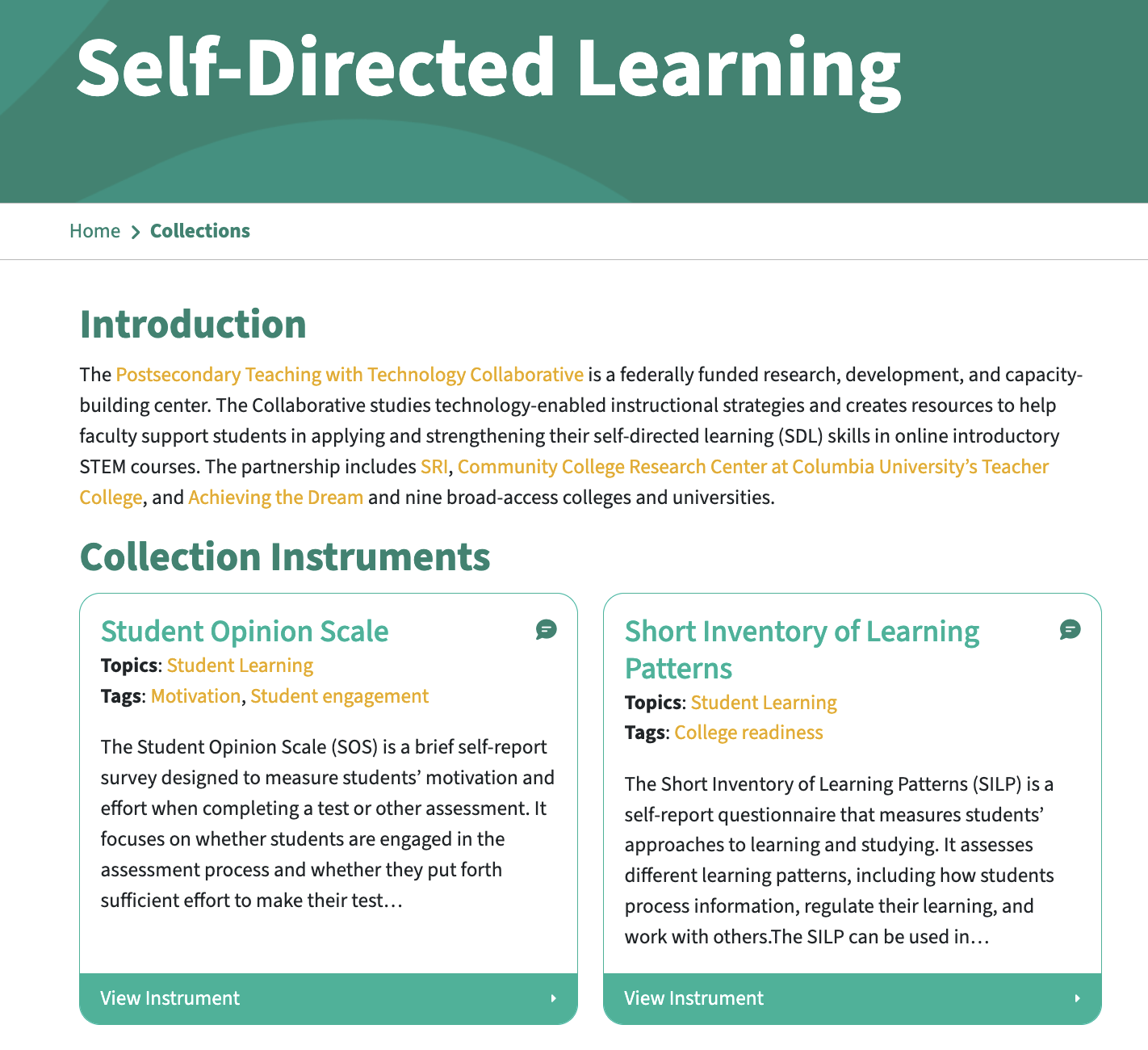
This new EdInstruments collection includes nearly two dozen questionnaires, scales, inventories, and other tools used by Postsecondary Teaching with Technology Collaborative researchers throughout five years of study.
This research brief reports findings from a pilot study of the Collaborative’s SDL Instructional Model, which found that faculty and students perceived the model as valuable and distinct from typical practice in online courses.
This study highlights the value of a person-centered approach to self-directed learning and suggest that technology-integrated supports can promote adaptive learning behaviors in online STEM learning environments.
This technical report describes the data sources, harmonization procedures, and psychometric analyses used to gather evidence for the reliability, validity, and fairness of the SDL survey measures.

College students continue to sign up for online courses at increasing rates, but they also pass them at lower rates than face-to-face courses. To support better outcomes, this paper describes how the Postsecondary Teaching with Technology Collaborative research team leveraged self-directed learning (SDL) concepts to design, develop, and test three instructional strategies for online learning.

Online courses have become an increasingly common feature of the higher education landscape, expanding access and offering flexibility for students.
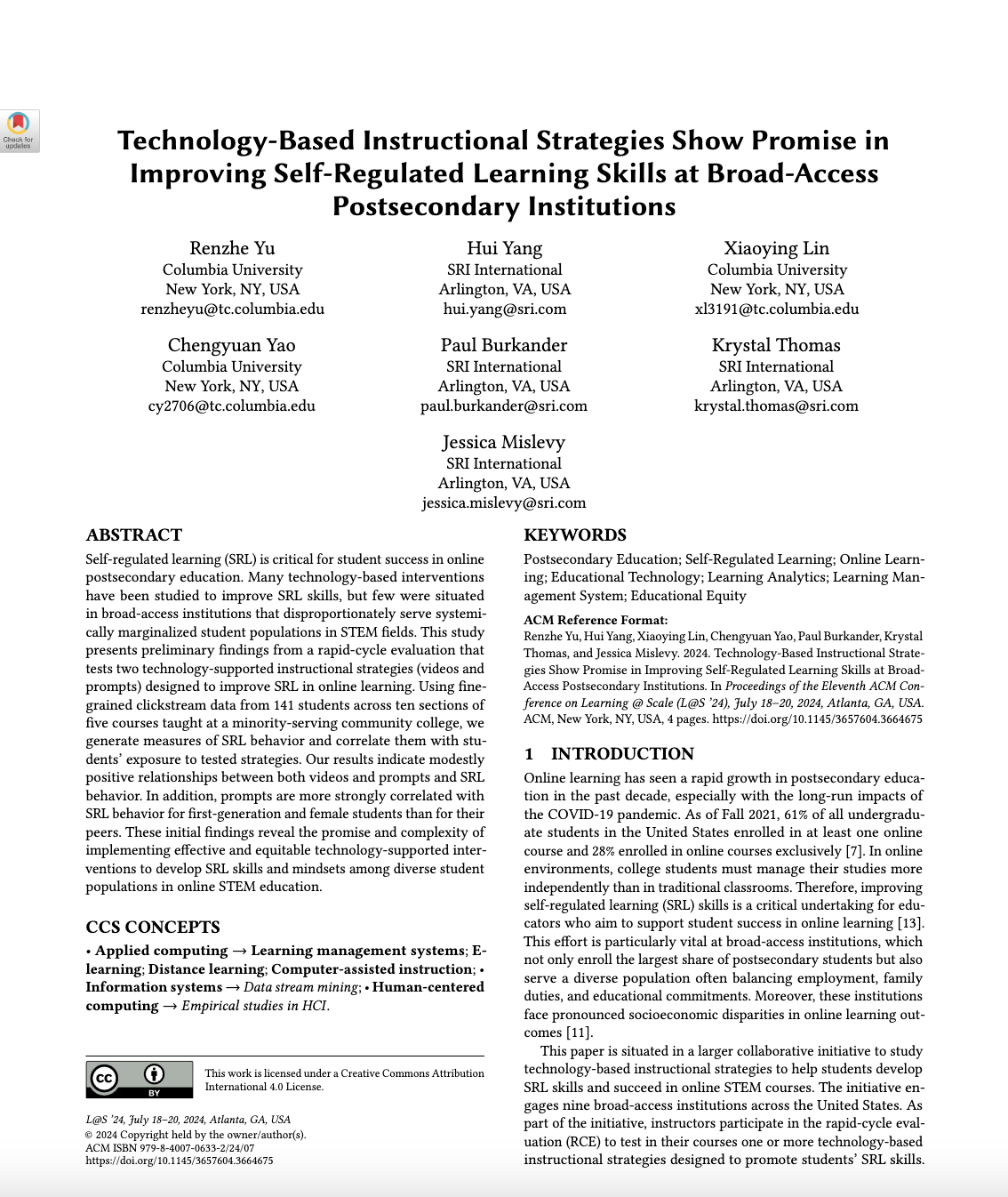
Self-regulated learning (SRL) is critical for student success in online postsecondary education. Many technology-based interventions have been studied to improve SRL skills, but few were situated in broad-access institutions that disproportionately serve systemically marginalized student populations in STEM fields.
This Postsecondary Teaching with Technology Collaborative report examines how faculty and staff at nine institutions reconsidered students’ online learning needs in the midst of the pandemic, and it explores how supports were offered to help students strengthen their self-directed learning skills.

This Postsecondary Teaching with Technology Collaborative brief discusses some of the challenges with online teaching reported by STEM instructors, describes a self-directed learning (SDL) framework to address these challenges, and highlights support strategies that can be integrated into teaching practices.