- Overview
- Faculty
- Leaders and Administrators
- The Science Behind the Model
The SDL Instructional Model is grounded in 20 years of prior research and designed to address the challenges of remote teaching and learning, including performance gaps between students enrolled in face-to-face and online courses and difficulties promoting student engagement. The model is the result of of five years of intensive research led by the Collaborative, which designed and tested a set of online strategies in community colleges and broad-access four-year institutions across the U.S.
The strategies in the model were identified through a systematic review of research on effective SDL interventions and were then adapted for online courses with instructors at partner institutions. The model was co-designed and iteratively revised with administrators and instructors representing diverse perspectives and with input from students, to ensure its relevance and usefulness for multiple audiences. It was then piloted in real-world settings at colleges and institutions across the U.S.
Research Findings
- Is feasible, free, and ready to use in authentic course contexts. The model provides clear and concise guidance and resources for implementing the strategies. In most cases, instructors found the strategies easy to integrate into their courses and easy to implement.
- Yields engagement from students. Most pilot instructors reported that three quarters or more of their students completed the activities. Students who did not complete the activities had disengaged with the course or used the SDL strategies selectively based on their course goals or other time commitments and responsibilities.
- Has value to instructors and students. Instructors found the strategies insightful for adjusting course content to better support student learning. Students said the strategies helped them assess their workload and responsibilities and plan their schedules.
- Demonstrates evidence of improving SDL skills. The rapid-cycle evaluations showed that being in a course implementing at least one strategy had a positive impact on student’s use of applied learning strategies and reflection on their learning approach. The pilot study was too small to detect such impacts.
- Is likely to improve end-of-course grades. Additional analyses drawing on the broader evidence base for postsecondary interventions indicated a 78% probability (rapid-cycle) and 67% probability (pilot) that the strategies had a positive effect on grades.
- May offer particular benefits to some students. The rapid-cycle evaluations suggested stronger effects for first-generation and female students, as well as likely benefits for students who started a course with low confidence but high vigilance around studying or who reported lower SDL skills and mindsets.
Research Approach
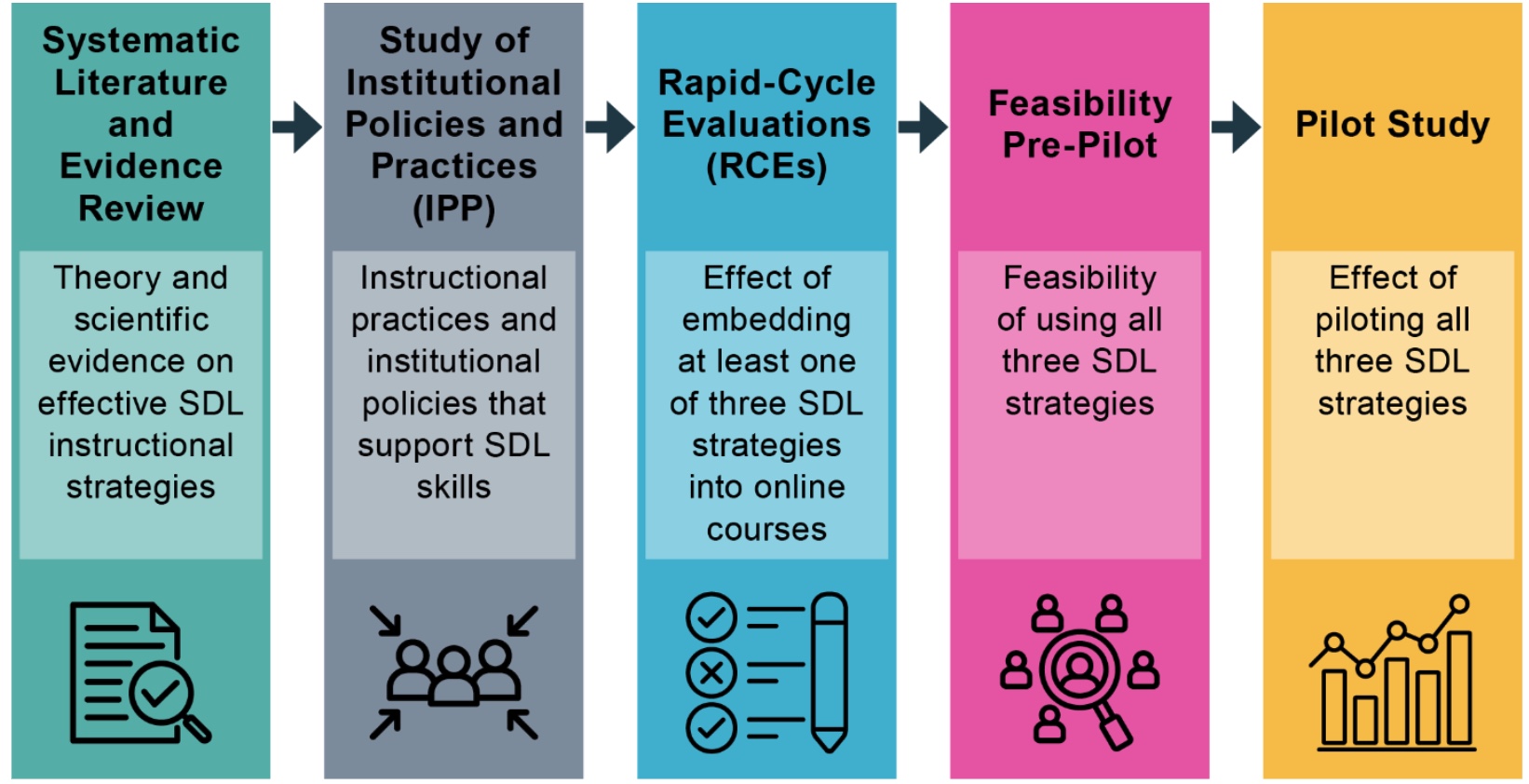
The Collaborative led a five-year, multi-stage study to understand how colleges and universities support student learning in online courses and test and refine technology-enabled instructional strategies to support students in strengthening self-directed learning mindsets and skills.
Foundational Learning and Evidence Review
To start, we developed a framework to inform the development of SDL strategies that instructors could use to improve college students’ agency and capacity to manage online learning. Based on existing theory and research, the framework contains three interconnected learning processes:
- Motivation (e.g., belonging, confidence)
- Metacognition (e.g., planning, reflection)
- Applied learning (e.g., help-seeking, strategy use)
Learn more about the SDL framework.
Study of Institutional Practices and Policies
In the first year of our research, the Collaborative conducted surveys, interviews, and focus groups across partner institutions to understand how institutions support SDL skills and student learning in online courses. We explored faculty and student understandings of online learning needs to inform the development of light-touch strategies intended to improve outcomes in online courses.
Rapid-Cycle Evaluations
Through rapid-cycle evaluations in the second and third years of our research, the Collaborative tested and refined one or more of our SDL strategy prototypes in a small group of online courses. We collaborated with faculty members to design three strategies and made real-time updates to the strategies throughout the evaluations.
Feasibility Pre-Pilot Study and Instructional Model Pilot Study
The Collaborative then tested the feasibility of combining all three SDL strategies into one course, conducting interviews to gather insights into the instructional model’s usability and feasibility and to inform revisions of the model. In the fourth year of our research, the Collaborative conducted a pilot study of all three SDL strategies in a wider group of courses to examine the usability, feasibility, and potential impact of the full instructional model.
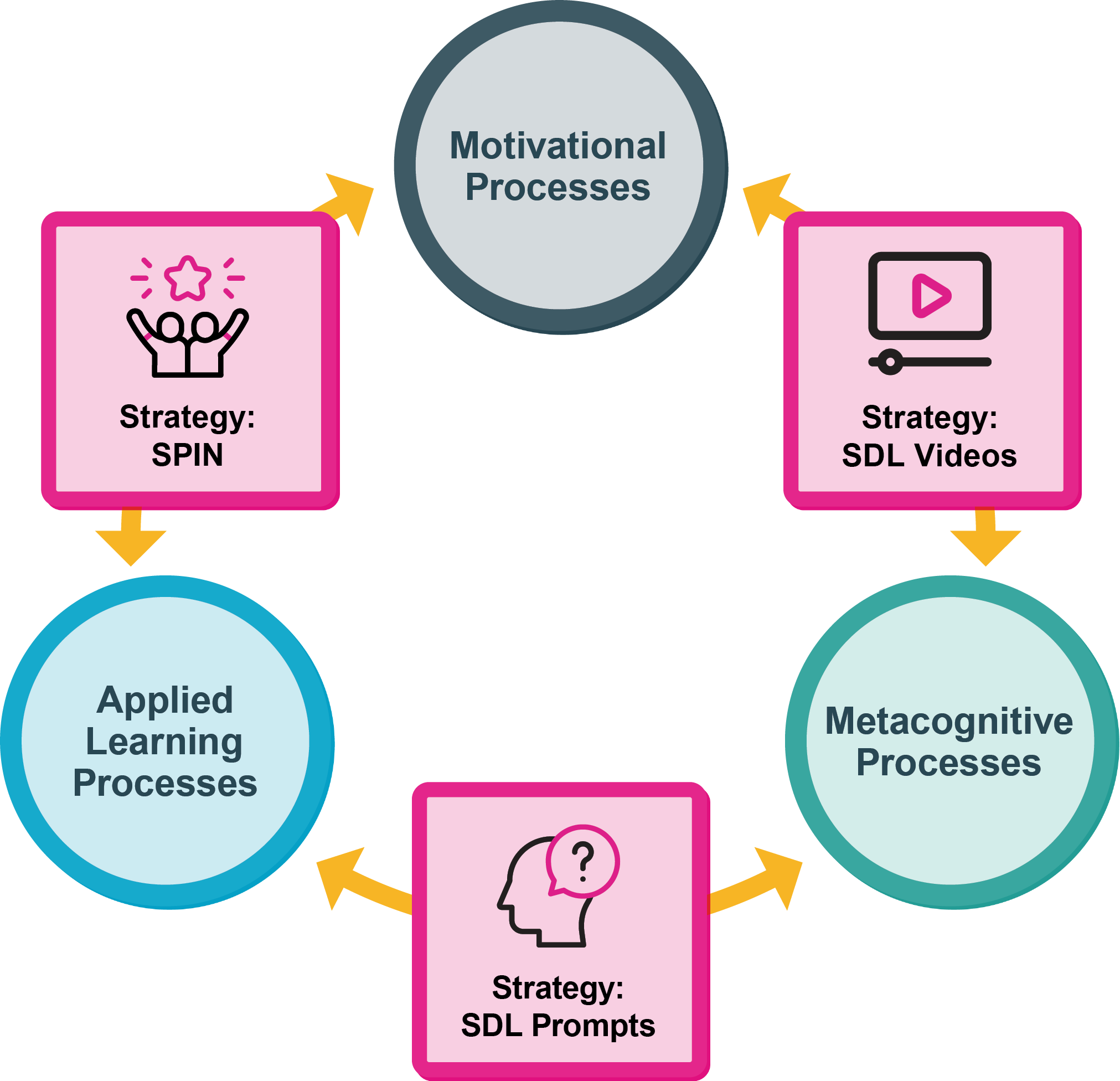
Culminating Self-Directed Learning Instructional Model
Interconnections between instructional strategies and students’ motivational, applied learning, and metacognitive processes.
What’s Next?
The Collaborative encourages college educators and students to contribute to a Learning Agenda to guide future investigation into SDL and online postsecondary education.